What Is the Best India Tour Package for First-Time Travelers?
September 1, 2026
What Is the Best India Tour Package for First-Time Travelers?
Choosing the right India Tour Package for your first visit can feel surprisingly difficult. India is not one simple destination with a handful of attractions; it is a vast country where every region offers a completely different experience. You can explore Mughal monuments in Delhi and Agra, royal palaces in Rajasthan, peaceful backwaters in Kerala, spiritual cities along the Ganges, Himalayan landscapes in the north, or tropical beaches in Goa.
For a first-time traveler, the challenge is not finding places to visit but deciding which places belong together in one practical itinerary. The best approach is to choose a route that gives you a balanced introduction to India's history, culture, food, architecture, and everyday life without spending most of your holiday sitting in transportation.
For many first-time international visitors, a well-planned Delhi–Agra–Jaipur itinerary is the easiest starting point because the three cities form India's famous Golden Triangle and offer a strong concentration of major attractions. Travelers with more time can then add Rajasthan, Ranthambore, Kerala, or another region based on their interests.
Why the Golden Triangle Is Ideal for First-Time Visitors
For someone visiting India for the first time, the Delhi, Agra, and Jaipur route is difficult to beat. It works almost like an introductory course to the country: Delhi gives you the energy and complexity of the capital, Agra introduces you to Mughal architecture through the Taj Mahal and Agra Fort, and Jaipur brings you into the world of Rajasthan's forts, palaces, markets, and colorful traditions.
The biggest advantage is efficiency. Rather than flying across the country between completely different regions, you can travel overland between three closely connected destinations and spend more of your holiday sightseeing.
This matters enormously on a first trip because India can initially feel overwhelming. Traffic is busy, cities are large, and distances can be deceptive when viewed on a map. A focused route gives you time to adjust to the pace of Indian travel while still experiencing some of the country's most famous landmarks.
The itinerary is also flexible enough to be shortened to around five or six days or expanded into a longer journey of eight to ten days.
What Should a First-Time India Tour Include?
A good first trip should include history, culture, architecture, food, local experiences, and some free time rather than consisting entirely of famous monuments.
Delhi is an excellent starting point because it introduces travelers to several historical periods, from Mughal architecture to colonial-era landmarks and modern India. Agra is essential for travelers who want to see the Taj Mahal, but the city should not be treated as nothing more than a quick photograph at the monument's entrance. Agra Fort and the city's old markets add useful context to the Mughal story.
Jaipur then changes the atmosphere completely, with its pink-colored historic areas, royal palaces, hilltop forts, traditional crafts, and bustling bazaars.
If your schedule allows, adding another Rajasthan destination can make the journey feel more immersive. Rajasthan offers destinations such as Jaipur, Jodhpur, Udaipur, Bikaner, Ajmer, and Chittorgarh, each with its own character and attractions.
The trick is resisting the temptation to visit all of them during your first holiday. Three or four well-experienced destinations will usually create better memories than seven cities experienced through hotel check-ins and hurried departures.
How Many Days Are Best for a First India Trip?
The ideal duration depends on how much of the country you want to experience, but 7 to 10 days is a useful starting point for first-time travelers who want a focused northern India itinerary.
A seven-day trip could include Delhi, Agra, Jaipur, and perhaps one additional experience, while ten days gives you enough room to add another Rajasthan destination or Ranthambore.
If you have two weeks, you can create a much more relaxed itinerary and combine the Golden Triangle with destinations such as Udaipur, Jodhpur, Varanasi, or Kerala.
The most important principle is not to measure your holiday by the number of cities visited. India rewards slower travel because many of the most memorable moments happen outside the headline attractions: eating at a local restaurant, watching artisans work, wandering through a market, taking an evening walk, or simply sitting on a hotel terrace after a long sightseeing day.
The Best 7-Day India Itinerary for Beginners
A seven-day itinerary can provide an excellent introduction without requiring travelers to cross enormous distances. Begin in Delhi, where two days allow you to experience both Old Delhi and important historical landmarks in New Delhi.
From Delhi, continue to Agra for the Taj Mahal and Agra Fort. The next stage is Jaipur, where you can explore Amber Fort, City Palace, Jantar Mantar, Hawa Mahal, and local markets.
| Day | Destination | Main Experiences |
|---|---|---|
| Day 1 | Delhi | Arrival, Old Delhi or relaxed city exploration |
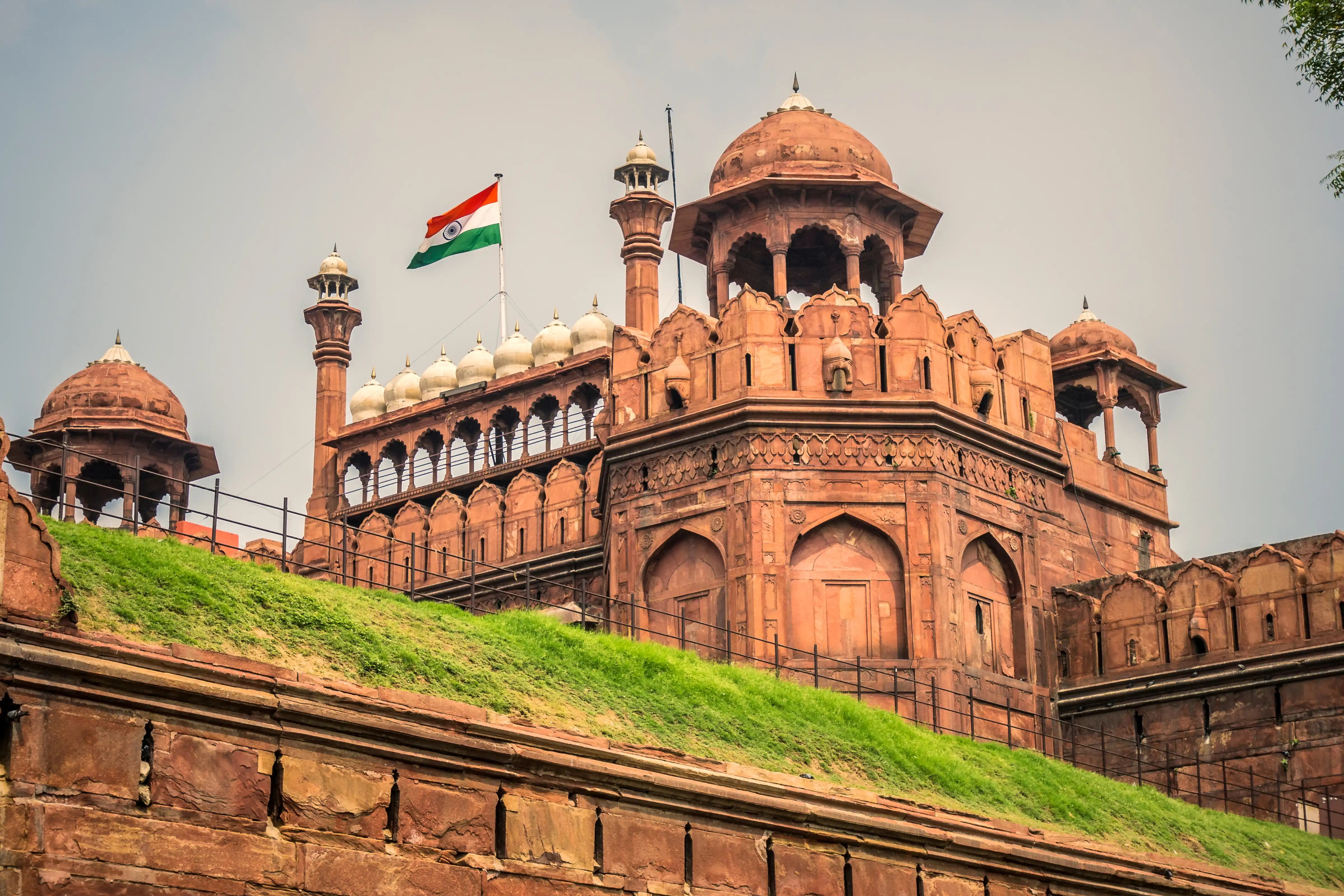
| Day 2 | Delhi | Red Fort, Humayun's Tomb, Qutub Minar, India Gate |
| Day 3 | Delhi to Agra | Travel to Agra, Taj Mahal, Agra Fort |
| Day 4 | Agra to Jaipur | Travel to Jaipur, evening market or Hawa Mahal |
| Day 5 | Jaipur | Amber Fort, City Palace, Jantar Mantar |
| Day 6 | Jaipur | Markets, local experiences, additional sightseeing |
| Day 7 | Jaipur/Delhi | Departure or onward travel |
This itinerary is intentionally simple. It gives you enough time to understand each destination instead of racing through it. If your international flight arrives late, add another night in Delhi rather than trying to compensate by removing important sightseeing later.
The Best 10-Day India Tour for First-Time Travelers
If you have ten days, the trip becomes significantly more comfortable. After Delhi, Agra, and Jaipur, you can add Ranthambore, Jodhpur, or Udaipur, depending on your interests.
Ranthambore is particularly attractive for wildlife enthusiasts, while Jodhpur is ideal for travelers interested in forts, old-city architecture, and Rajasthan's distinctive culture. Udaipur offers a slower, more romantic atmosphere centered around lakes, palaces, and surrounding hills.
The choice depends on what you want the trip to feel like. A wildlife-focused traveler might choose Delhi, Agra, Jaipur, and Ranthambore, while someone more interested in architecture could continue from Jaipur to Jodhpur and Udaipur.
You should also consider transportation when making the decision. Rajasthan is geographically large, and adding destinations simply because they look close together on a map can result in long travel days.
Why a Private India Tour Can Be Easier for Beginners
For first-time visitors, a private tour can remove much of the uncertainty that comes with navigating an unfamiliar country. A private driver can handle the road journey while you concentrate on sightseeing, photography, and enjoying the scenery.
This is especially useful in Rajasthan, where distances between destinations can be substantial and road conditions and traffic can make journey times unpredictable.
A private guide can also provide historical context that you would otherwise miss. Standing in front of a centuries-old palace is impressive, but understanding who built it, why it was built, and how it was used can transform the experience.
A private itinerary also allows you to adjust the pace. If you are exhausted after visiting a major monument, you can take a break rather than following a large group's fixed schedule.
Families, older travelers, and couples often appreciate this flexibility. The best India Tour Package is therefore not necessarily the one with the most destinations included. It is the one that matches your pace, interests, accommodation preferences, transportation needs, and budget.
Should You Choose a Fixed or Customized Package?
A fixed itinerary can be convenient because the major decisions are already made, but customization is often more valuable for a first trip.
Imagine two travelers with the same ten-day holiday. One loves wildlife and photography, while the other is fascinated by architecture and food. Giving both travelers exactly the same itinerary would make little sense.
The first might prefer Ranthambore, while the second could enjoy additional time in Jaipur or Udaipur. A customized package lets you adjust the balance between sightseeing and relaxation.
You can also choose different accommodation levels, from comfortable three-star hotels to luxury heritage properties and palace hotels.
Transportation can be customized as well. Some travelers prefer private cars because they want door-to-door convenience, while others enjoy trains because they want to experience another part of Indian travel.
Before booking, ask exactly what is included: hotels, breakfast, transfers, entrance fees, guides, domestic flights, train tickets, and safari permits can all affect the final cost.
Best India Tour Package for Culture and History
If history and culture are your priorities, a Delhi–Agra–Jaipur–Rajasthan itinerary is probably the strongest option.
Delhi introduces you to layers of Indian history, while Agra provides an extraordinary concentration of Mughal architecture. Jaipur then takes you into the royal world of Rajasthan, where forts and palaces dominate the landscape.
Extending the trip to Jodhpur or Udaipur adds another dimension because each city has its own architectural identity and cultural atmosphere.
The experience becomes even richer when you step away from monuments. Visit a local market, try regional dishes, watch traditional artisans, or join a walking tour through an older neighborhood.
India's culture is not displayed only inside museums. It is happening around you. That is why allowing some unstructured time can be as valuable as scheduling another attraction.
Best Package for Families
Families should generally choose a slower itinerary with fewer hotel changes. Children may love the Taj Mahal, forts, markets, and colorful streets, but they can become tired when every morning starts with an early departure.
A seven- to ten-day itinerary can be structured so that major sightseeing is balanced with swimming-pool time, relaxed lunches, and shorter travel days.
Private transportation is particularly useful for families because it gives you flexibility when children need breaks.
Choose hotels with family-friendly facilities and convenient locations rather than selecting accommodation purely because it is the cheapest option.
If your children enjoy animals, adding Ranthambore can create one of the most exciting parts of the trip. If they are more interested in history and architecture, staying longer in Jaipur may be better.
Best Package for Couples and Honeymooners
Couples often want a mixture of sightseeing, atmosphere, comfort, and memorable experiences. The classic Delhi–Agra–Jaipur route works well because it combines iconic landmarks with luxury accommodation, heritage properties, rooftop dining, and romantic settings.
Agra naturally becomes a highlight because of the Taj Mahal, while Jaipur offers opportunities to stay in historic-style properties and explore colorful markets together.
Extending the trip to Udaipur can add a slower, more romantic chapter. Udaipur's lakes, palaces, and scenic surroundings are very different from the intensity of Delhi or the bustle of Jaipur.
Couples should avoid overloading the itinerary with early departures. Instead, choose a few important experiences and give yourselves time to enjoy them.
Best Package for Luxury Travelers
India offers enormous opportunities for luxury travel, particularly in Rajasthan. A luxury itinerary can combine five-star city hotels, heritage properties, palace-style accommodation, private guides, chauffeured vehicles, and carefully selected dining experiences.
Rajasthan is particularly strong for this style of travel because historic royal residences have been transformed into luxury hotels, while cities such as Jaipur, Jodhpur, and Udaipur offer high-end accommodation with distinctive architectural character.
Luxury does not have to mean spending every night inside a palace. The real benefit is convenience. Private airport transfers, dedicated guides, comfortable vehicles, flexible sightseeing, and well-located hotels can remove many of the small frustrations associated with long-distance travel.
If your budget allows, prioritize service and location rather than simply choosing the most expensive hotel.
Best Package for First-Time Travelers on a Budget
Budget travelers can experience India extremely well without booking a luxury package. The key is to spend money where it improves the experience and save where it does not.
Comfortable mid-range hotels, selected private transfers, trains between suitable destinations, local restaurants, and shared experiences can keep costs manageable.
You also do not need to visit every paid attraction. India's streets, markets, neighborhoods, temples, and public spaces can provide some of the most interesting experiences at little or no cost.
When comparing packages, look beyond the headline price. A very cheap package may exclude entrance tickets, guides, meals, transportation, or airport transfers, making the final cost much higher.
What Is the Best Time to Visit India?
There is no single best month for the entire country because India has several climatic regions. Northern destinations such as Delhi, Agra, Jaipur, and Rajasthan are generally most comfortable during the cooler months, while southern destinations have different seasonal patterns.
This is one reason travelers should choose their destinations before choosing their dates. If your priority is the Golden Triangle and Rajasthan, cooler-season travel is generally easier for extensive outdoor sightseeing.
If you want Kerala, Goa, or another southern destination, seasonal conditions should be considered separately. Avoid assuming that a month that is perfect for Rajasthan will automatically be perfect for every region you add.
What Should First-Time Travelers Know About Visas?
International travelers should check India's current visa requirements before booking their trip. Visa requirements can depend on nationality, passport type, travel purpose, and other factors.
Use the official Government of India visa information when checking requirements rather than relying on an unofficial intermediary. Your passport should also meet the applicable validity requirements.
Visa rules can change, so checking the official information close to your departure is much safer than relying on an old blog post.
How to Choose the Right Tour Operator
A reliable tour operator should make the trip easier rather than simply selling a long list of destinations.
Look for clear inclusions, transparent pricing, realistic travel times, and responsive communication. Ask whether the package includes private transportation, airport transfers, local guides, hotel breakfasts, monument entrance fees, and assistance during the trip.
If wildlife is included, ask specifically about safari permits and vehicle arrangements.
Reviews can help, but do not judge a company entirely by a handful of testimonials. Look for consistency across multiple sources and pay attention to comments about communication, punctuality, hotels, drivers, and how problems were handled.
Most importantly, avoid packages that appear suspiciously cheap without explaining what is excluded. The cheapest price is not always the lowest total cost.
What Should You Pack for Your First India Trip?
Your packing list should depend on your route and season, but comfortable clothing and walking shoes are essential. You will probably spend more time walking than you expect, especially around forts, monuments, markets, and historic neighborhoods.
Lightweight clothing is useful for warmer periods, while layers are important for winter mornings in northern India. If you include Rajasthan's desert regions, remember that temperatures can change significantly between day and night.
A small day bag, reusable water bottle, sunscreen, sunglasses, basic medication, travel documents, and portable phone charger are practical additions.
Respectful clothing is also useful when visiting religious sites.
Final Recommendation
For most first-time international visitors, the best India Tour Package is a 7- to 10-day private Delhi, Agra, and Jaipur itinerary, with the option to add Ranthambore or another Rajasthan destination if you have additional time.
This route provides a manageable introduction to India's history, architecture, food, culture, and everyday atmosphere without forcing you to travel across half the country.
If you have 10 to 14 days, adding Udaipur, Jodhpur, or Ranthambore can create a richer Rajasthan experience. If you have two or three weeks, you can look beyond northern India and consider destinations such as Kerala, Goa, or Varanasi.
The most important thing is to avoid building an itinerary simply because a destination appears on a list of "must-see" places. Choose locations that fit your interests and connect logically by geography and transportation.
Conclusion
The best first trip to India is not necessarily the longest or the one containing the greatest number of destinations. It is the itinerary that gives you enough time to experience each place without turning every day into a race against the clock.
For most travelers, Delhi, Agra, and Jaipur provide the strongest foundation because the route combines major historical attractions, Mughal architecture, Rajasthan's royal heritage, markets, food, and cultural experiences in a relatively manageable circuit.
From there, you can personalize the journey with wildlife in Ranthambore, the blue city of Jodhpur, romantic Udaipur, spiritual Varanasi, or the backwaters and beaches of Kerala.
A well-designed first trip should also leave room for spontaneity. India can surprise you, and some of your favorite memories may come from experiences that were never written into the original itinerary.
Give yourself enough time to stop for a chai, explore a market, photograph a quiet street, talk with a local guide, or simply watch the world move around you. That balance between planning and discovery is what can turn a first visit from a sightseeing checklist into a genuinely memorable journey.
FAQs
What is the best India tour package for first-time visitors?
A 7- to 10-day Delhi, Agra, and Jaipur itinerary is one of the best choices for first-time travelers because it combines major monuments, history, culture, shopping, food, and Rajasthan's royal heritage.
How many days are enough for an India tour?
Seven to ten days is a good starting point for a focused northern India trip. If you want to combine the Golden Triangle with several Rajasthan destinations or southern India, 12 to 21 days will provide a much more comfortable experience.
Should I book a private or group tour?
A private tour generally offers greater flexibility, particularly for first-time travelers, families, couples, and people with specific interests. Group tours can be more economical and social, but they normally operate according to a fixed schedule.
Is the Golden Triangle enough for a first trip to India?
Yes. Delhi, Agra, and Jaipur can provide an excellent introduction to India's history and culture. If you have additional time, adding Ranthambore, Udaipur, or Jodhpur can expand the experience without requiring you to start an entirely new regional itinerary.
What should I consider before booking an India tour package?
Check the itinerary, hotel categories, transportation, guide services, entrance fees, meals, airport transfers, cancellation terms, and any domestic flights or train tickets. Also verify current visa requirements through India's official government portal before traveling.